
Navigating the Energy Shift: What the energy transition means for fuel operators today
Date: 16 Apr 2026
The energy transition has become one of the loudest conversations in the market. But for fuel distributors, wholesalers, and multi-site retailers, the real question is simple: what changes in the ay-to-day of running a fuel business, and what decisions matter now?
In our latest Expert Series interview, Craig Hutchinson, Principal at Nous Group, shared a pragmatic view of what’s coming and what fuel operators can do about it.
“The transition isn’t just about one fuel replacing another. It’s about demand becoming more diverse, more distributed, and harder to predict. That has real consequences for scheduling, pricing, assets, and the systems you run your business on.”
Importantly, the shift is already visible in the data. EVs are now 12.1% of new vehicle sales (including PHEVs) in the first half of 2025, yet still only around
2% of the total vehicle fleet on Australian roads. That gap explains why many operators are feeling pattern change before they feel volume collapse.
And the “where” is changing as much as the “what”. Most EV charging happens away from the forecourt. Australian Government information notes EV owners report charging at home around 80% of the time. “Consumers aren’t just changing what energy they use. They’re changing where they consume it. That shifts the economics of the forecourt and the route plan at the same time.”
So, what does this mean for operators trying to stay profitable through a messy, mixed-energy decade. Below are implications that consistently show up in strategy, operations and technology conversations across the sector.
1. Your fuel mix will diversify sooner than you expect, and your systems need to keep up
The most immediate shift is not petrol an diesel disappearing overnight. It’s more SKUs, more edge cases, more compliance complexity, and a longer transition period where multiple fuel types coexist.
Australia still relies on liquid fuels for more than half of final energy demand, and transport accounts for around~70% of refined liquid fuel consumption. At the same time, policy and investment signals are pushing harder on lower-carbon liquid fuels,
with the Australian Government announcing a $1.1 billion Low Carbon Liquid Fuels program, with an intention to open for applications in mid-2026.
“The operational challenge is portfolio management. You can’t run tomorrow’s fuel mix through yesterday’s product master data, pricing logic, and compliance workflows.”
For distributors and retailers, this typically translates into:
- trialling blended products and alternative fuels where they fit (and where supply is credible)
- building the ability to handle new product categories without manual workarounds
- preparing pricing, invoicing, and reporting for mixed-energy customer accounts
If your ERP still hard-codes product types or requires custom work every time you add a new category, the transition will be more expensive than it needs to be.
2. Demand will become more "lumpy", more local and less predictable.
AEMO and CSIRO projections highlight why the next decade can feel confusing: EV adoption can accelerate quickly in sales, while the fleet still takes time to turn over. In their 2024 EV projections, EVs reach 56–60% of new vehicle sales by 2030 across scenarios, while EVs are only ~10–12% of the vehicle fleet by 2030.
That means the operational reality for fuel businesses is not a clean, linear decline. Instead, you get corridor effects and customer-segment effects:
- metro commuting shifts faster than long-distance freight
- some fleets change early; others run diesel for much longer
- demand concentrates in certain routes and depots, while thinning elsewhere
“You’re going to see demand move before you see demand disappear. The winners will be the operators who can spot those shifts early and re-route, re-price, and re-invest accordingly.”
This is where better telemetry, customer analytics, and route optimisation stop being “nice to have” and become core capability.

3. Legacy assets won’t vanish, but you’ll need to upgrade how you run them
The big risk in the transition is not that tanks, trucks, terminals and forecourts become worthless overnight. The risk is that they become less utilised, less flexible, and more expensive per unit delivered. That’s why Craig’s view is that the smartest operators focus on re-optimising assets rather than assuming wholesale replacement:
- multi-product scheduling and dispatch optimisation
- tighter reconciliation (loss control, metering, variance investigation)
- predictive maintenance and better asset visibility
- forecourt digitisation that reduces manual process and exception handling
“Stranded assets are often ‘stranded’ because the operating model didn’t evolve. You can extend ROI dramatically by modernising the way assets are scheduled, monitored and managed.”
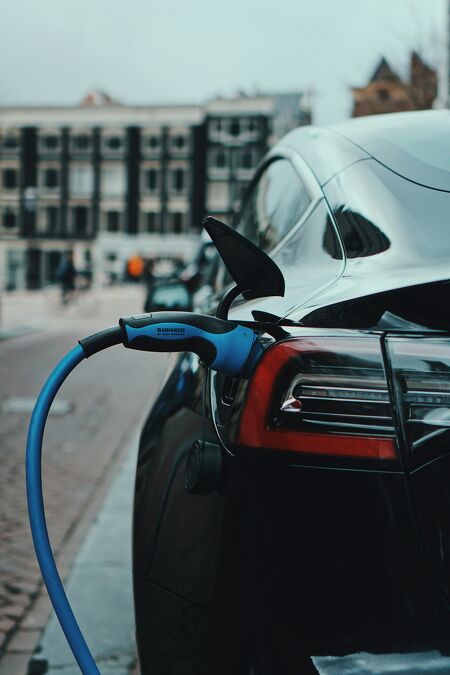
The same logic applies to EV charging. It’s not just “install a charger”. It’s grid capacity, commercial utilisation, uptime, and customer experience.
“Charging economics punish guesswork. Operators need disciplined site selection, a partnership mindset, and systems that can manage uptime, pricing, settlement and customer support.”
4. Regional and remote networks may feel constraints earlier
Regional operators face a real mix of challenges: longer supply chains, patchier connectivity, constrained grid capacity in some locations, and customers who remain diesel-reliant for longer.
But they also have a strategic advantage: they understand local fleets, local travel patterns, and local energy constraints better than anyone.
“Regional distributors can lead by building solutions that actually work locally. That might be micro-hybrid models over time, but it starts with operational excellence and smarter data.”
Practically, this points to:
- cloud systems with offline resilience for dispatch and compliance
- route optimisation to reduce cost-to-serve as volumes shift
- improved tank and meter telemetry to reduce losses and downtime
- pragmatic pilots that match real customer segments, not hype cycles
5. Convenience Retail become more important, not less.
As traditional fuel margins remain tight, convenience economics matter even more.
Fuel retailers typically receive a small portion of the pump price (often cited as 3–5%) to cover operating costs and leave a modest margin, with AIP-referenced ACCC analysis suggesting retail net profit on petrol around 3 cents per litre (noting the cited period)
Older ACCC analysis (as quoted in AIP material) has also highlighted how non-fuel can disproportionately contribute to profit: non-fuel sales were under 20% of revenue in 2013–14, but contributed over 40% of retail sector net profits.
And the broader convenience sector is significant in its own right. AACS notes the convenience channel generated $10.4 billion turnover in 2023.
“If you treat convenience as a side business, you’ll miss the shift. The operators who win will be obsessive about execution: ranging, availability, loyalty, and offers that fit real customer missions.”
The operational implication is clear. Forecourt, store, loyalty and accounts need to connect, so you can manage the customer relationship across multiple energy types and purchasing behaviours.
6. Partnerships matter more than ever.
Mid-sized operators do not need to own every capability to participate in the transition. Partnerships can reduce risk and accelerate delivery, especially where capex, uptime, or specialist expertise are critical.
Craig highlights three partnership plays that show up repeatedly:
- Charging operators & utilities: host chargers via third-party models to reduce capex spikes and leverage operational expertise
- OEMs fleet partners: share usage data (routes, dwell time, account activity) to place the right offer at the right sites
- Councils & infrastructure programs: align upgrades with local planning pathways and funding programs
“The transition rewards operators who partner intelligently and keep optionality. You want to move early enough to learn, but not so early that you lock yourself into the wrong bet.”

7. Capability before Complexity
Craig’s closing advice is simple: build capability first. That starts with stabilising the fundamentals, including disciplined dispatch and scheduling, strong inventory integrity, automated reconciliation, clean master data, and pricing and invoicing that can adapt without heavy customisation. Only once those foundations are in place does it make sense to layer in added complexity like new fuel categories, charging offers, or advanced analytics.
“The operators who thrive won’t be the ones who chase every headline. They’ll be the ones who make their business easier to run, more data-driven, and more adaptable as the mix changes.”
The shift won’t happen overnight. But the operators who act now will shape the next decade of downstream energy.
About Craig Hutchinson
Craig Hutchinson is a Principal at Nous Group with 15+ years’ experience in strategy, transformation, and growth across energy and industrial sectors. He supports clients to navigate market shifts, embed modern operating models and scale new business ventures.
About Nous Group
Nous is an international management consultancy that helps organisations design strategy, improve performance, and transform operations. In the energy sector, Nous supports clients across digital and operating model transformation, data and analytics, and transition strategy, helping companies adapt to new fuels, mixed energy models and changing customer demand.