
What surveillance and security systems really mean for fuel retailer revenue and profitability
Date: 2 Jun 2026
Surveillance has long been treated as a grudge spend for fuel retailers; an added cost you hoped you’d never need and only turn to after something had already gone wrong. But in our latest Expert Series conversation with Rodney Guinto, Retail Segment Manager from Axis Communications, it became clear just how out of date that mindset now is.
Today’s surveillance and security systems are no longer passive. They’ve become one of the simplest, most effective ways for fuel retailers to reduce loss, protect staff, and unlock insights that meaningfully improve customer experience.
Rodney notes that most retailers don’t realise they’re already sitting on valuable operational data within their existing camera networks, data that can help them run safer, leaner, and more profitable sites. The role of surveillance has fundamentally changed.
In this piece, we explore the trends reshaping how surveillance is used in fuel retail and what they mean in practice for operators.
1. From “after the fact” to “in the moment”
Rodney explains the shift clearly: “Traditional CCTV surveillance was built for hindsight; reviewing drive‑offs, investigating disputes, and piecing together incidents after they happened. Modern surveillance has flipped that model. It now gives operators real‑time visibility and the ability to intervene before losses occur.”
Integrated analytics like number plate recognition, object detection, and pump controls allow retailers to identify risks as they occur and, in many cases, stop theft or disputes before fuel is even dispensed. And when incidents do happen, clearer footage and smarter search tools drastically cut investigation time and improve recovery rates.
The shift is simple but significant: surveillance has evolved from a reactive system into a front‑line operational tool that directly reduces losses and day‑to‑day risk.
Impact: Fewer losses, faster investigations, stronger operational control.
2. Safety and liability pressures are rising and surveillance helps prevent risk
Rodney notes that incidents like slips, spills, aggression, and unsafe vehicle movements have all increased over the years and for small operators, even one claim can be financially devastating. Surveillance is now playing a much larger role in preventing these incidents altogether.
Modern systems can detect liquid on the floor, recognise people standing in unsafe areas, and identify raised voices or yelling long before a situation escalates. They can also spot queues or bottlenecks forming so staff can intervene faster during busy periods.
Rodney adds “Retailers now want to know before a fall happens.”
This evolution turns surveillance into an early warning system. It reduces insurance exposure, improves response time, and helps operators protect both customers and staff.
Impact: Operators avoid costly claims, protect their license to operate, improve insurance outcomes, and create safer environments for staff and customers

3.Protecting people, not just property
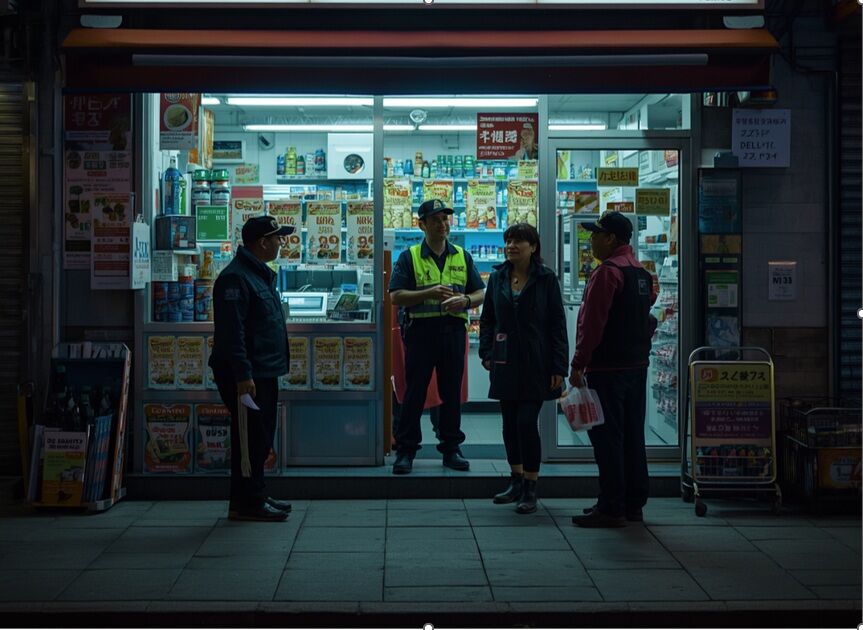
One of the biggest cultural shifts in fuel retail is the move toward surveillance as a staff‑safety tool. Rodney explains that more operators are dealing with late‑night aggression, frustration at the counter, and customers entering high‑risk areas such as forecourts, bathrooms, and after‑hours service windows. Surveillance is increasingly being used to protect people first, assets second.
Cameras and microphones can now detect raised‑voice patterns, unusual after‑hours activity, or unwanted behaviour that may escalate. And many retailers are taking this a step further by introducing body‑worn cameras for frontline staff, a change delivering measurable results.
Rodney shared a striking statistic from recent deployments: "Sites using body‑worn cameras saw aggression against staff drop by 30–40%”
The reason is simple: people behave differently when they know they’re being recorded. For single‑site operators, especially those relying on young or casual staff, this can mean the difference between losing staff and keeping them, or between a quiet shift and an avoidable confrontation.
This shift reflects a new reality: modern surveillance isn’t about policing customers. It’s about giving staff confidence, reducing harm, and creating safer workplaces.
Impact: Safer interactions, reduced aggression, better staff retention, and a more secure environment for frontline teams.
4. From footage to fuel‑retail intelligence
Most retailers lean heavily on POS data to understand sales performance, but POS only tells the end of the story. It doesn’t capture customer behaviour, missed opportunities, or what happened in the moments before someone reached the counter.
This is where modern visual data reshapes what’s possible.
Cameras now generate rich metadata: queue lengths, dwell time, vehicle and foot‑traffic patterns, heatmaps, and even abandoned journeys. This gives retailers a clear view of how customers actually move through their forecourt and store what slows them down, what they’re drawn to, and where friction occurs.
Rodney summed it up simply "Data is the new gold, but you have to know what to do with that data.”.
Visual insights open up practical improvements across daily operations:
Workforce planning: Align staff coverage with actual vehicle and foot‑traffic patterns, helping retailers plan more effectively for peak and quiet periods.
Queues & Dwell: Spot growing queues early to reduce wait times and prevent walk‑offs.
Heatmaps & Flow: See where customers go (milk, bread, hot food) and optimise layouts and promotions accordingly.
Visual data helps retailers understand the reasons behind why customers abandon a purchase, such as a blocked pump bay, a missing squeegee, or a dirty shelf that undermines confidence at the point of decision. When paired with POS or ERP data, these insights allow retailers to validate supplier promotions, compare store performance, identify operational inconsistencies, and maintain standards across multiple sites.
Impact: Clearer visibility of customer behaviour, more efficient operations, better conversion, and fewer silent revenue leaks
5. Multi‑sense sites are the next evolution
Rodney encourages retailers to think of their sites as a set of senses working together eyes, ears, and voice each strengthening awareness and response across the forecourt and store.
Cameras are the eyes, recognising movement, risk, and behaviour. Microphones act as the ears, detecting loud noises, raised‑voice patterns, or signs of distress. Speakers provide the voice, issuing warnings, playing automated messages, or triggering marketing prompts based on what the system sees or hears.
For example, if a camera detects a customer making a coffee, a nearby screen or speaker can prompt a relevant offer such as a coffee and donut special.
Working together, these systems create a responsive environment that can act automatically reducing pressure on staff, improving after‑hours safety, and giving multi‑site operators consistent visibility and control without needing to be onsite.
Impact: More responsive sites, safer after‑hours operations, and consistent oversight across locations, without increasing staff workload.
6. Cybersecurity and sustainability are now critical considerations
Every camera is a network device. Outdated firmware, weak credentials, or unmanaged third‑party systems introduce real cyber exposure. For fuel retailers handling payments, loyalty, and compliance data, this risk is no longer theoretical.
At the same time, 24/7 surveillance consumes energy, and multi‑site operators are increasingly expected to show sustainability improvements.
Sustainability is emerging as a parallel priority. Rodney notes that power consumption is now a key consideration: a single camera runs 24/7, and across multiple sites this becomes a meaningful cost and ESG factor. Modern devices address this through lower‑power hardware and edge‑based processing that reduces the load on servers, while also enabling automation such as adjusting lighting or HVAC based on real‑time activity on site.
These aren’t “nice to have” considerations; they are critical.
Impact: Reduced cyber risk, improved compliance, and a more energy‑efficient surveillance network that’s less costly to run and easier to maintain.


Surveillance is no longer just a box to tick. It has become one of the most versatile operational tools available to fuel retailers, helping them prevent loss, protect staff, reduce claims, improve customer journeys, and business insights that traditional POS data simply can’t provide.
For both large and small retailers, these benefits don’t require major budgets or specialist teams. They simply require a shift in mindset: viewing surveillance not as isolated hardware, but as part of the broader ecosystem that supports day‑to‑day operations.
When visual data connects with the systems retailers already rely on, it becomes far more powerful, turning cameras into a real‑time source of operational intelligence that strengthens safety, efficiency, and decision‑making across every site. Surveillance isn’t just about recording anymore. It’s about enabling smarter, safer, more responsive fuel retail operations.
As Rodney adds, the opportunity is already there. The next step is learning how to use it.